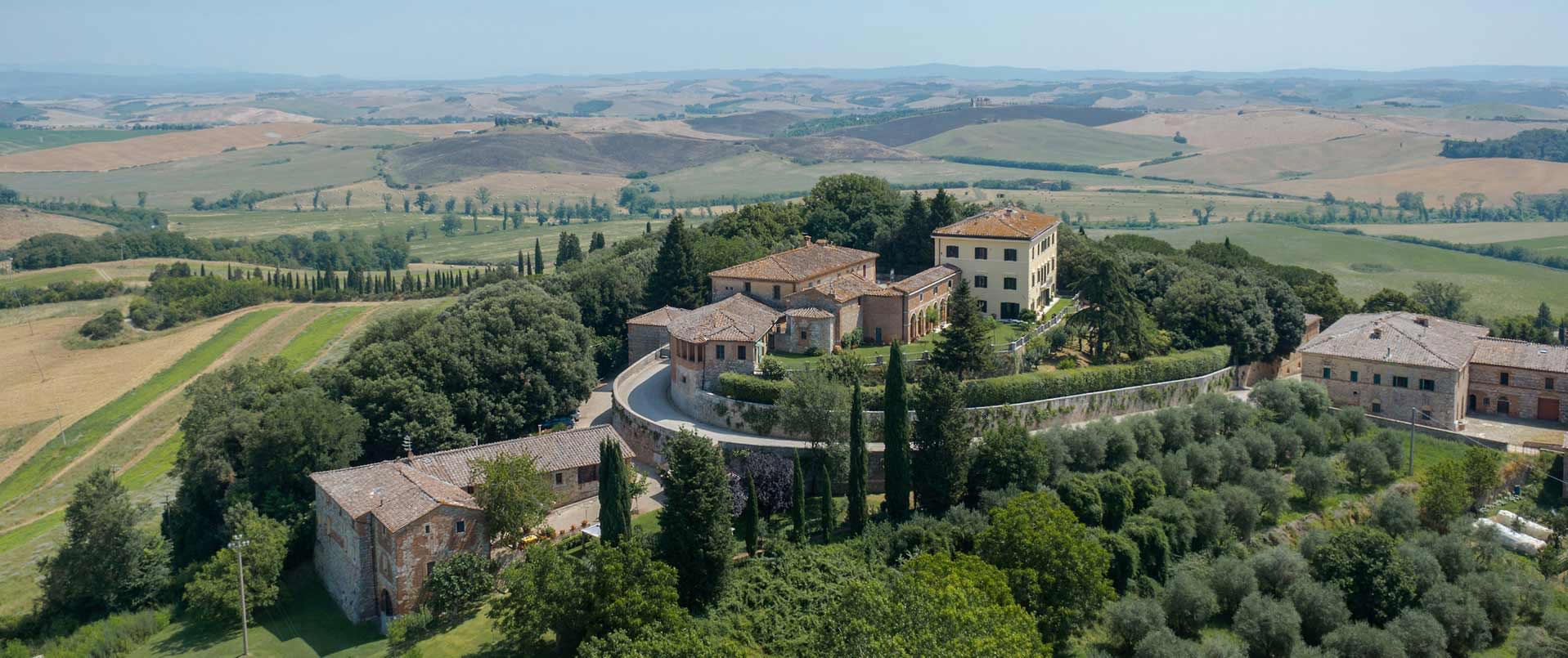

The Case del Biviere, owned by the Borghese family—one of the most illustrious and ancient Italian families—are located halfway between Catania and Syracuse, in the territory of Lentini.
The site, today declared a particularly important historical, artistic, and architectural interest by the Ministry of Cultural Heritage, used to host the ancient Lake Biviere. Its origins are even said to date back to Hercules, son of Jupiter, who created the Lacuus Herculeus for the Goddess Ceres, who needed water for her crops. Over the centuries, the lake changed its name to Veverè (meaning a watering hole for flocks and a fish hatchery), then Beverè, and finally Biviere.
After centuries of prosperity, as the lake was highly abundant in fish, the raging malaria rendered these areas unhealthy. Starting from the end of the 19th century, they became the focus of a massive reclamation project that was only completed at the end of the 1950s. In 1968, along with their 4 children, Princes Scipione and Maria Carla moved there with the idea of creating a citrus farm.
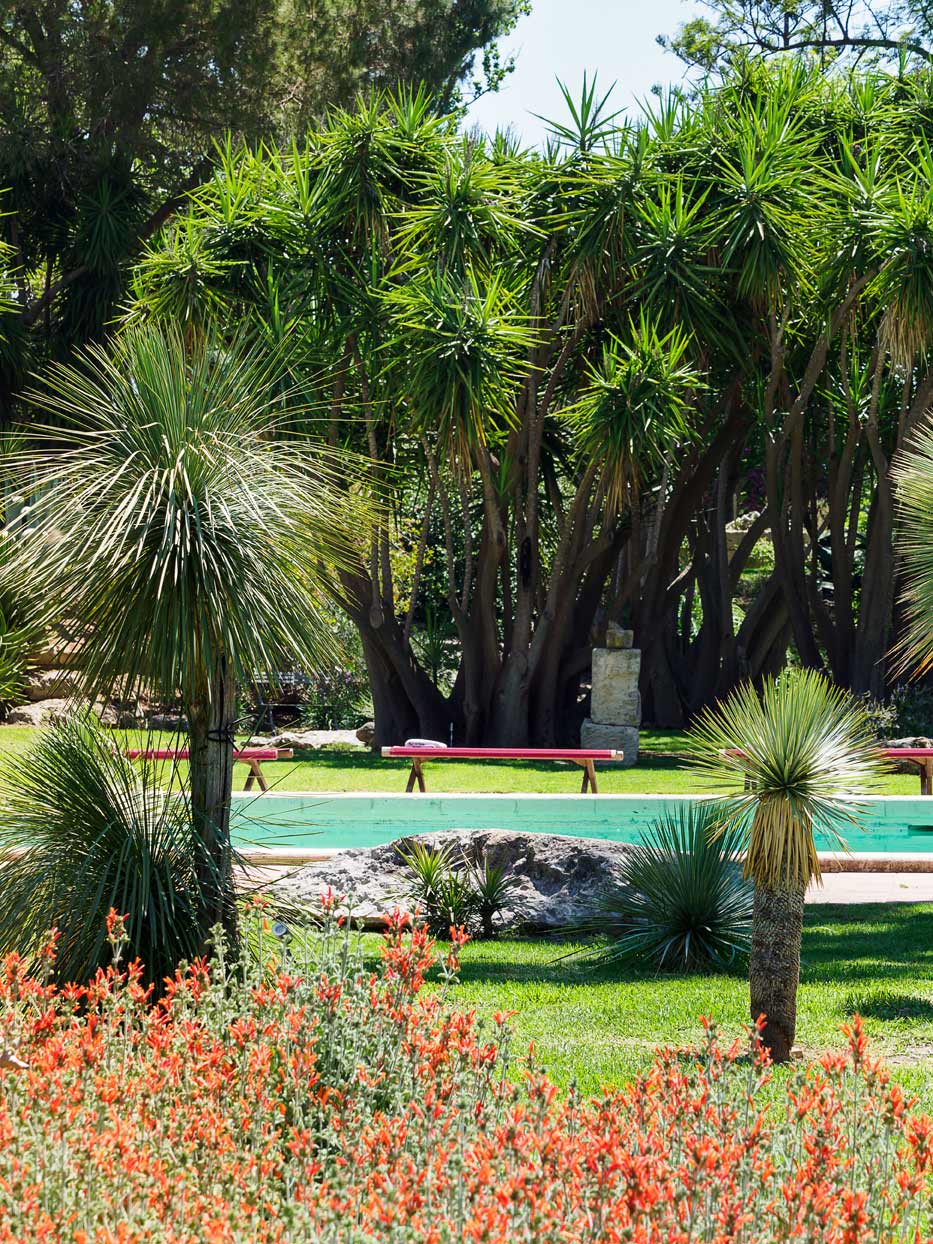
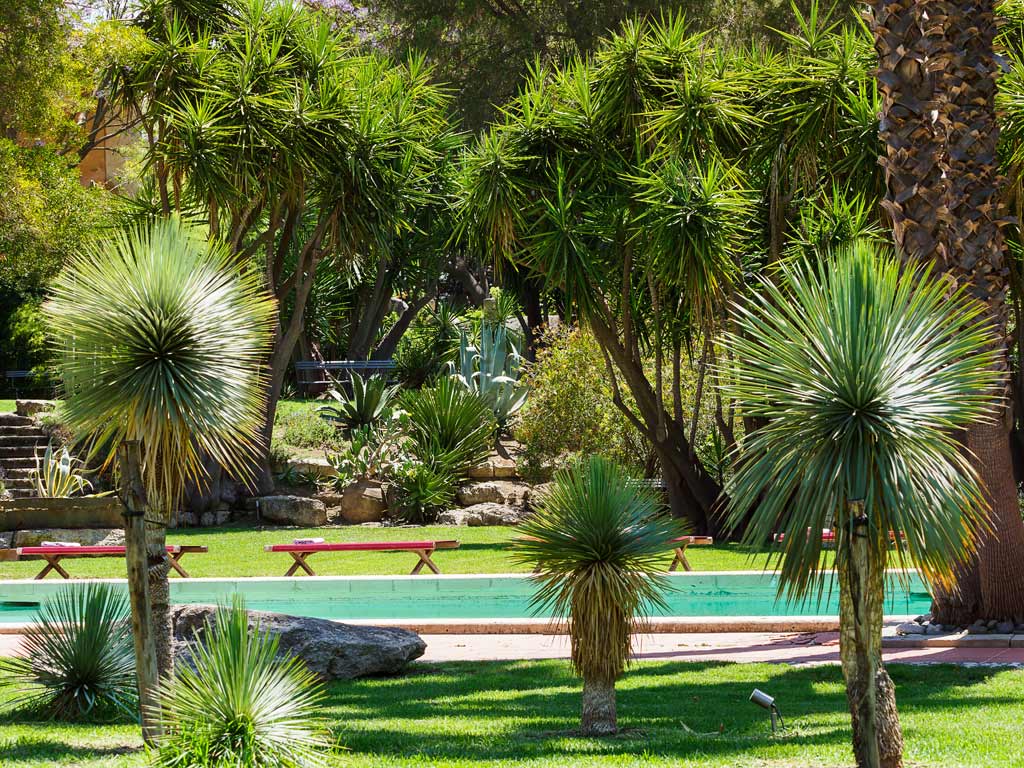
Within the estate, you can still find today the Church dedicated to Saint Andrew and two large residential buildings, as well as an exotic-Mediterranean Garden of about 2 hectares.
The main House dates back to the 16th century and stands opposite the ancient pier, where the buildings used as the fishing headquarters once stood. Also known as Villa Borghese, it was certainly built before 1693, the year the earthquake that struck eastern Sicily damaged its facades. Located perpendicular to the entrance avenue, it is organized in an “L”-shaped layout.
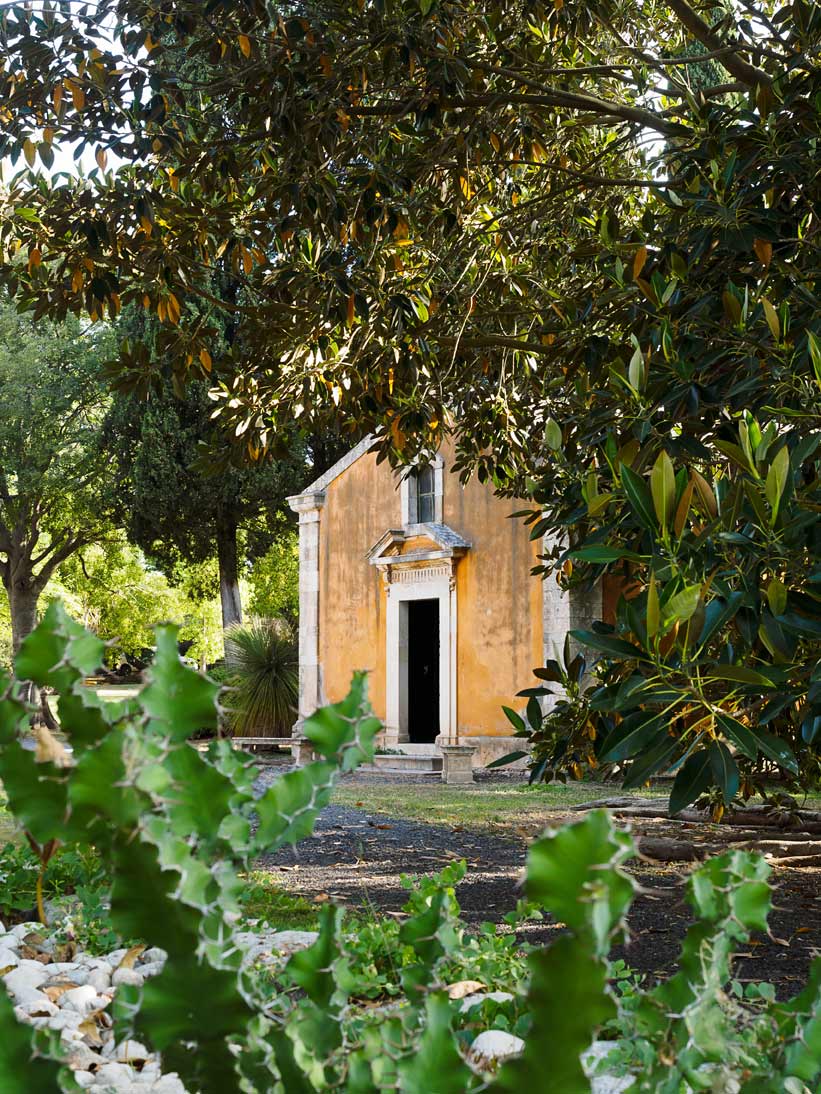
Along the entrance avenue to the east of the manor House lies the Chapel dedicated to Saint Andrew, patron saint of fishermen, which was rebuilt in 1694 immediately after the terrible earthquake.
Finally, continuing north along the entrance avenue, there is the Cacciatori (Hunters’) inn, built after 1693. Set on two levels, it has kept intact the internal structure typical of the “inns” of that era.
In front of the House where the fish was processed lies the ancient port which, emptied of its waters, was transformed thanks to Miki Borghese into a “verdant harbour”, as an Irish landscape architect visitor once wrote. In fact, the ancient piers, built with large blocks of white stone quarried from the surrounding tuff quarries, were the first to be recovered to host a rich collection of succulents.
The Garden was born from nothing, or rather, from what was left after the strenuous and long drainage works of the lake. It was Princess Miki herself who, with great love, passion, dedication, and tenacity, began planting the first seedlings in a very inhospitable, desolate place made only of stones and dust. Thanks to love, the rich soil that previously hosted a lake, and the Sicilian sun and light, the Garden came to life in just a few years.
In 1988, the Garden had the honor of being visited by the Queen Mother of England, who explicitly asked to see it. The Sovereign’s admiration was such that it prompted the Borghese Princes to open the “garden that wasn’t there” to visitors.
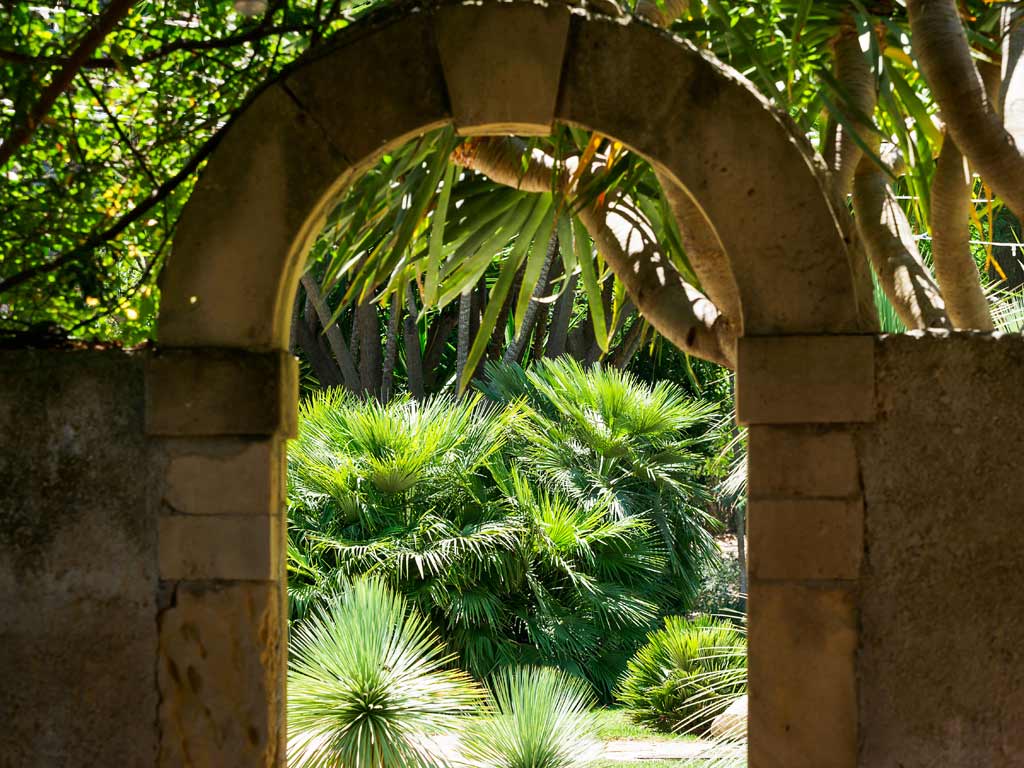
The Biviere Garden has now become a lush Mediterranean garden where native and naturalized forms coexist in harmony. The austere silhouettes of the succulents, which recall Renaissance sculptures, alternate with the lightness of Jasmine and Plumbago, which instead evoke the spontaneity and naturalness of English gardens.
The history of Biviere, a unique Mediterranean garden
The reconstruction of the historical phases that succeeded one another over time and led to the current state of the Case del Biviere in Lentini can be hypothesized, for the earliest period, through the history of the formation and subsequent modifications made to Lake Biviere starting from the Middle Ages. The mentions of the lake found in the oldest historical sources can be placed between the late 12th and early 13th centuries when the Templars, following a donation made by Rainaldo di Modica with the consent of Henry VI and Constance of Hauteville, received some lands in the territory of Lentini. To create a large reserve for hunting and fishing, the monk-knights blocked the waters of the Trigona-Galici river, initially with temporary structures, before their confluence with the San Leonardo river. Confirmation of the donation is attested by a diploma from 1210, from which it can be deduced that the territory is precisely the one that included the Biviere.
Visit the garden and the organic and biodynamic farm
We offer guided and experiential tours of our Garden and our Organic and Biodynamic Farm “Il Biviere”.
The Biviere Garden is a magical place full of charm, rich in botanical species from all over the world. Visitors lose themselves in a timeless place made of intoxicating colors and scents, where Nature is at its peak splendor.
Discover the farm’s organic products
The Farm has been organic since 1993 and produces and packages all types of citrus fruits (blonde and blood oranges, pink grapefruits, clementines, and lemons) and, to a lesser extent, Saturn peaches (pesche tabacchiera). Another product of the Farm is the organic orange blossom honey, delicious and rich in important nutrients.
Cooking and yoga classes
Upon request and depending on the time of year, we also offer cooking classes, yoga retreats, and workshops on topics related to the well-being of the person as a whole: body, emotions, mind, and spirit.
Biviere Borghese: a place of synergies between man and nature
Visits by reservation. Tour price: €15. Possibility of having lunch (€90), brunch (€65), breakfast (€30).
 Film sets
 Photo shoots
 Private events
 Set Commercials and Videoclips
 Weddings
 Cultural tourism
 Pool
Pool Relaxation and Wellness