Il Torrione and its history
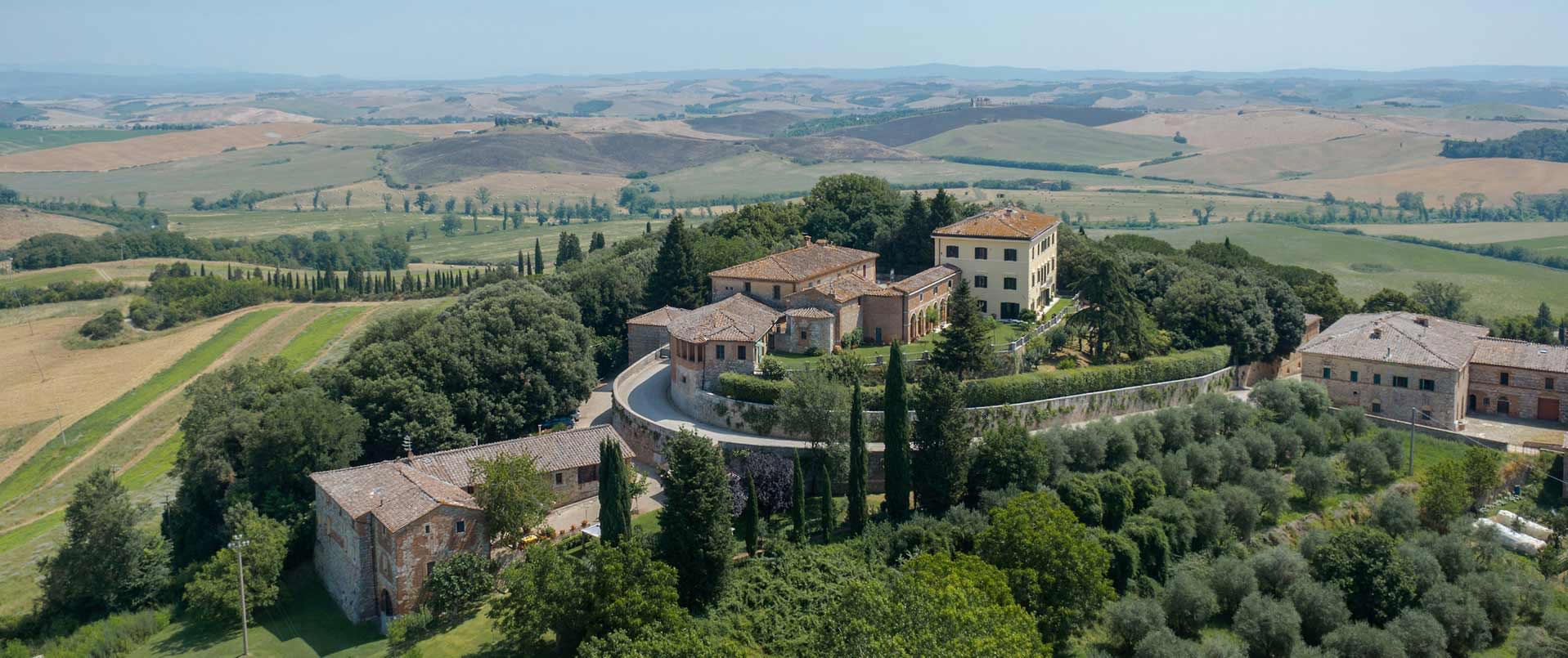
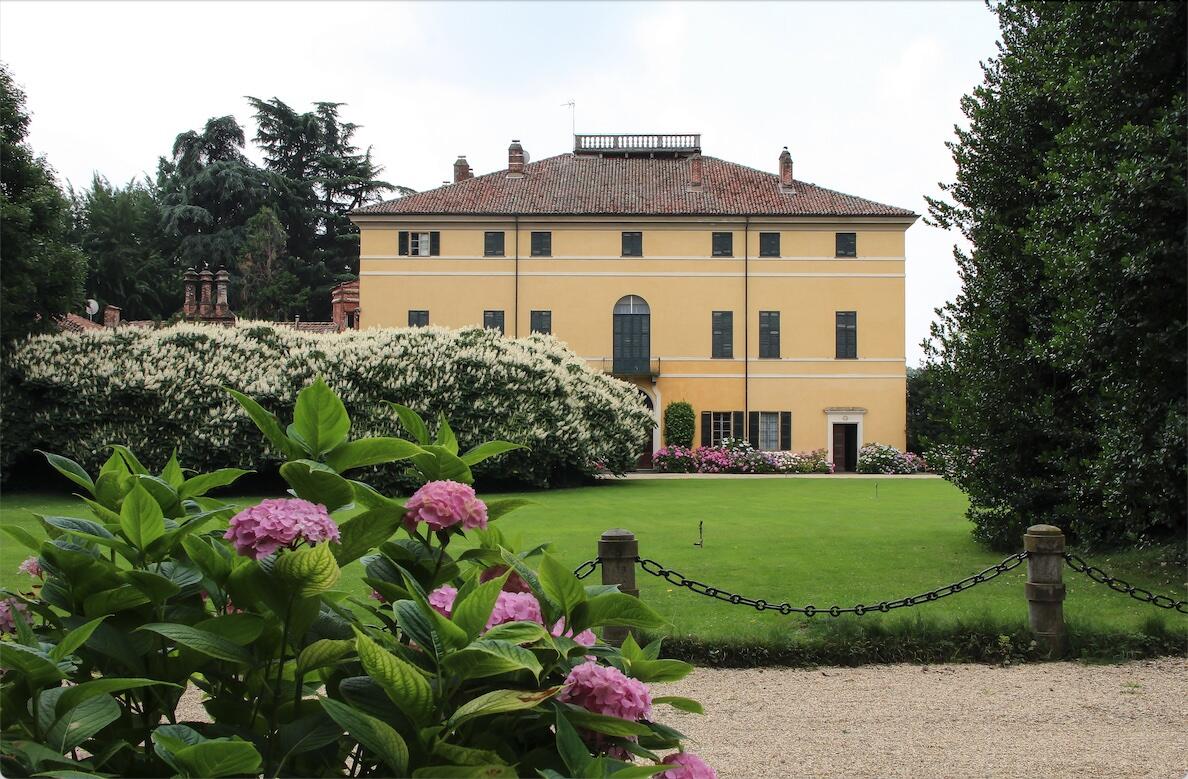
The property of the Marquis Doria Lamba of Pinerolo is a complex of medieval origin, which was enlarged over time until, in the early 19th century, it reached its current neoclassical structure of high artistic value. Initially belonging to the noble Trucchietti family of Pinerolo, then to the Canera di Salasco counts, the fortress was transformed in the 17th century into a manor house with large gardens.
At the beginning of the 19th century, the villa was enlarged by architects Ignazio Michela and Alessandro Antonelli. In 1856, Il Torrione was purchased by Marquis Leone Doria Lamba.
The Historic Park
190 years after the presentation of Xavier Kurten’s autographed project, the park of Villa Doria “Il Torrione”, covering over 16 hectares, is the largest of the private gardens designed by the Savoy family’s landscape architect.
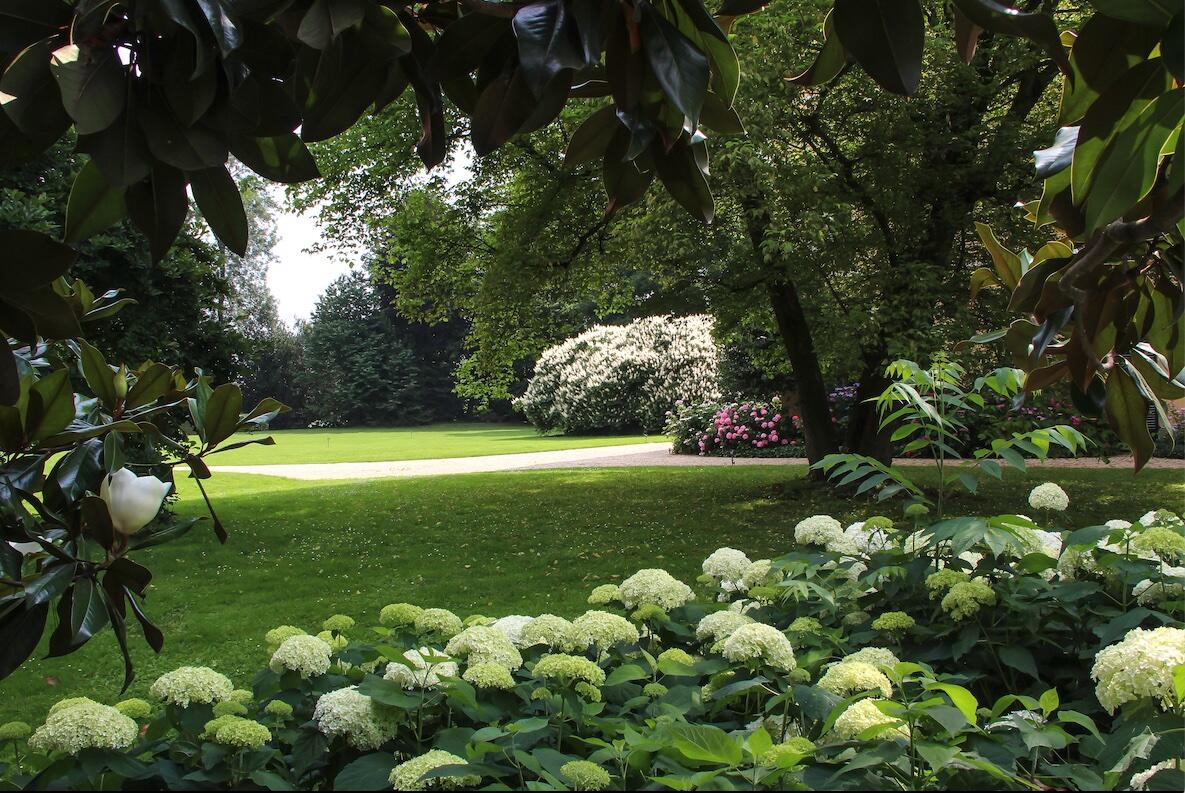
The park was designed according to the criteria of the romantic English gardens. It is grandiose, elegant, rich in monumental trees (some of which are rare), and it dominates the surrounding plain.
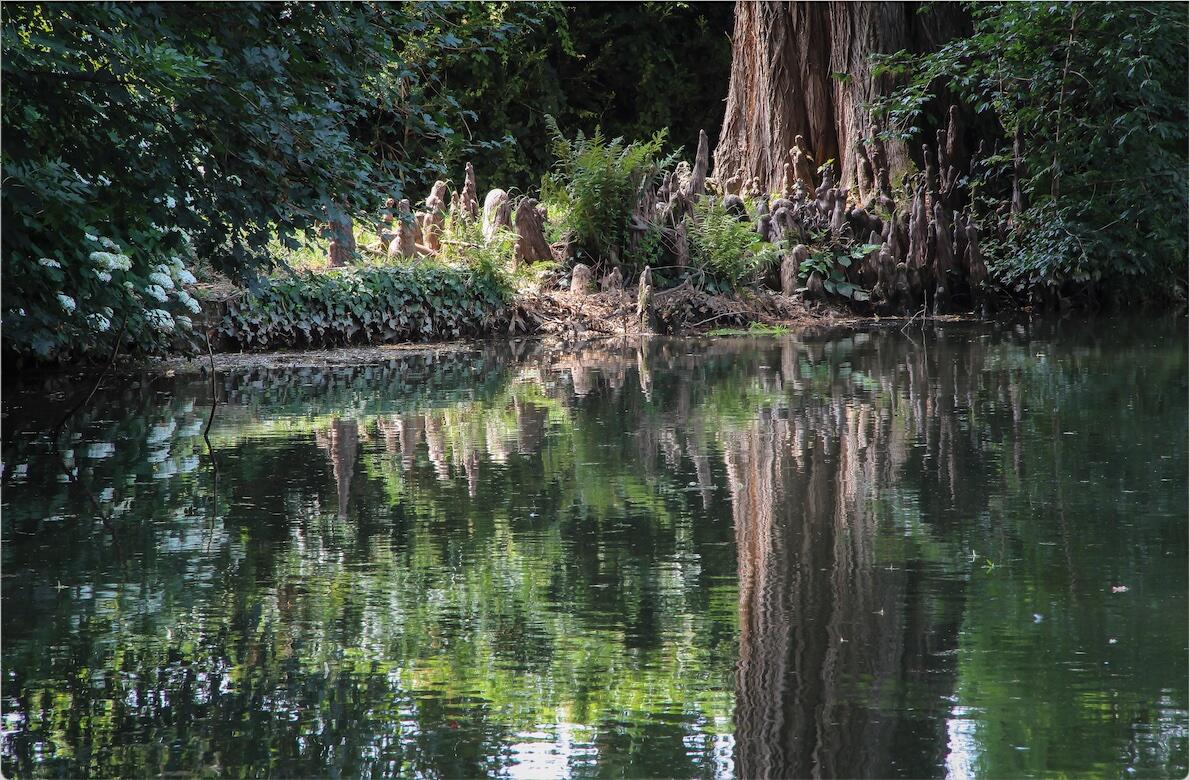
A long avenue of hornbeams, already present in the French land registry of 1811, leads to the entrance, where we find a small clearing surrounded by conifers, magnolias, tulip trees, horse chestnuts and other rare trees, overlooked by the Villa, the centrepiece of the park’s design. Beyond the villa, a larger clearing, bordered by a long wall, extends southwards to a large lake, in the centre of which there is a small island. On the shore, you can see the remains of the reconstruction of an ancient Celtic temple from which a small waterfall flows into the lake.
The small gamekeeper’s house closes off the far corner of the park, while a rare ha-ha, replacing the walls, allows the gaze to wander over the surrounding countryside. Finally, a small hill and an ancient ice house make the environment even more ancient and evocative.
All these elements of water and land give the park a romantic atmosphere. Various species of water birds regularly visit the lake.
The park is a natural heritage site with its rare and valuable specimens of Diospyros virginiana (American persimmons over 20 metres tall), dwarf horse chestnuts, lime trees, tulip trees, ginkgo biloba, pines, cedars, firs, cryptomeria, libocedrus, magnolias, centuries-old oaks, cedars of Lebanon, ilex, bamboo, and giant bamboo.
In recent years, the owners have begun a respectful enhancement of the park. A few discreet changes have allowed them to create a splendid collection of hydrangeas, comprising over 85 different varieties.
Architect Xavier Kurten and the romantic English garden
Thanks to his profound knowledge of botany and hydraulic engineering techniques, Xavier Kurten introduced the taste for romantic English gardens to Piedmont.
During the documented years of his presence in Piedmont (1812-1840), Kurten designed numerous gardens: four belonging to the House of Savoy (the parks close to the castles of Racconigi, Govone, Agliè and Pollenzo) and several belonging to aristocratic Piedmontese families (San Martino Alfieri, Monticello, Pralormo, Sansalvà in Santena, Sommariva Perno, the Torrione in Pinerolo, Castagneto Po, the Chiabra in Mondovì and the Cavour family castle in Santena).
Services
The Torrione Historical Park is open by appointment from mid-March to the end of October for individual and group visits. Visits are always introduced and can be guided. A shuttle service allows people with reduced mobility to visit. Moreover the park hosts special openings during the hydrangea blooming season.
The Park has large outdoor spaces for hosting events: weddings, shootings, corporate meeting events, concerts and theatre performances. Two halls equipped with video projectors, sound systems and Wi-Fi complete the offer.
 Film sets
 Gardens
 Parks
Parks
 Pet Friendly
 Photo shoots
 Private events
 Set Commercials and Videoclips
 Visits
 Weddings