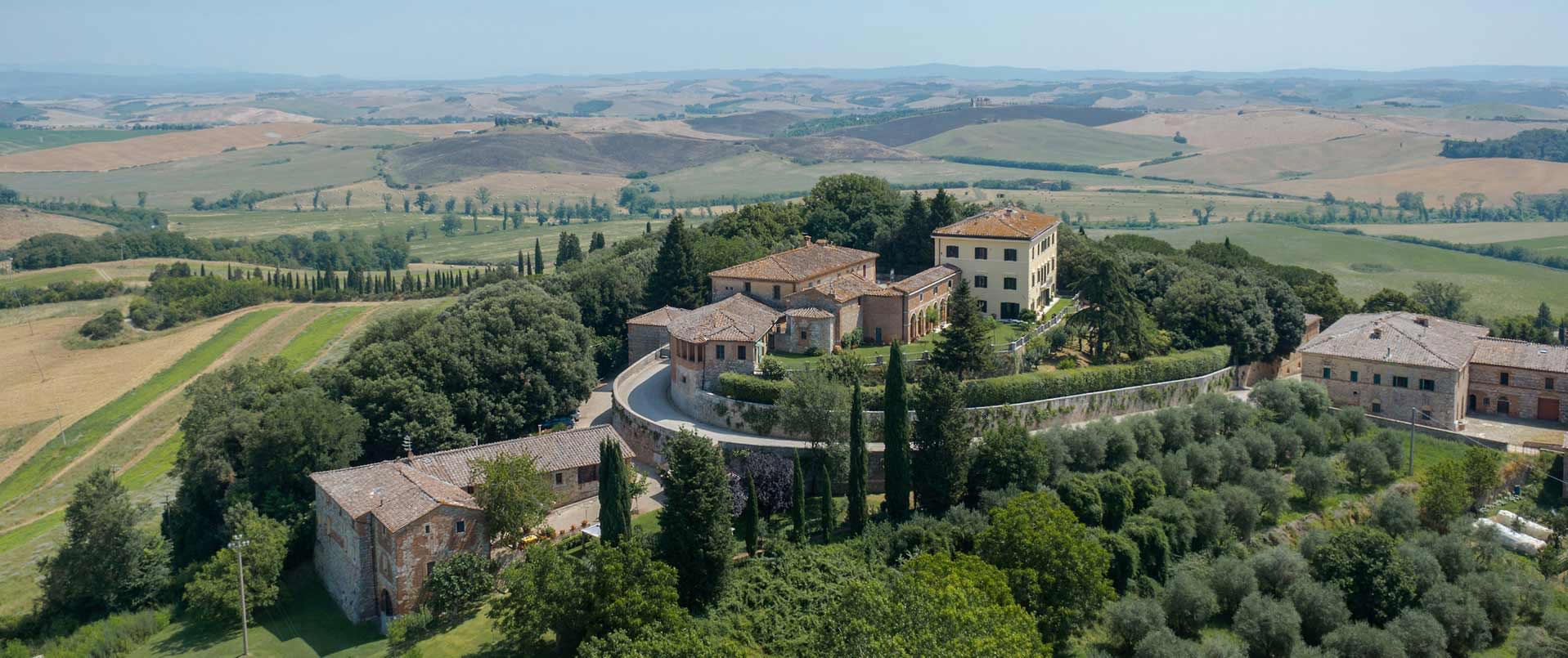
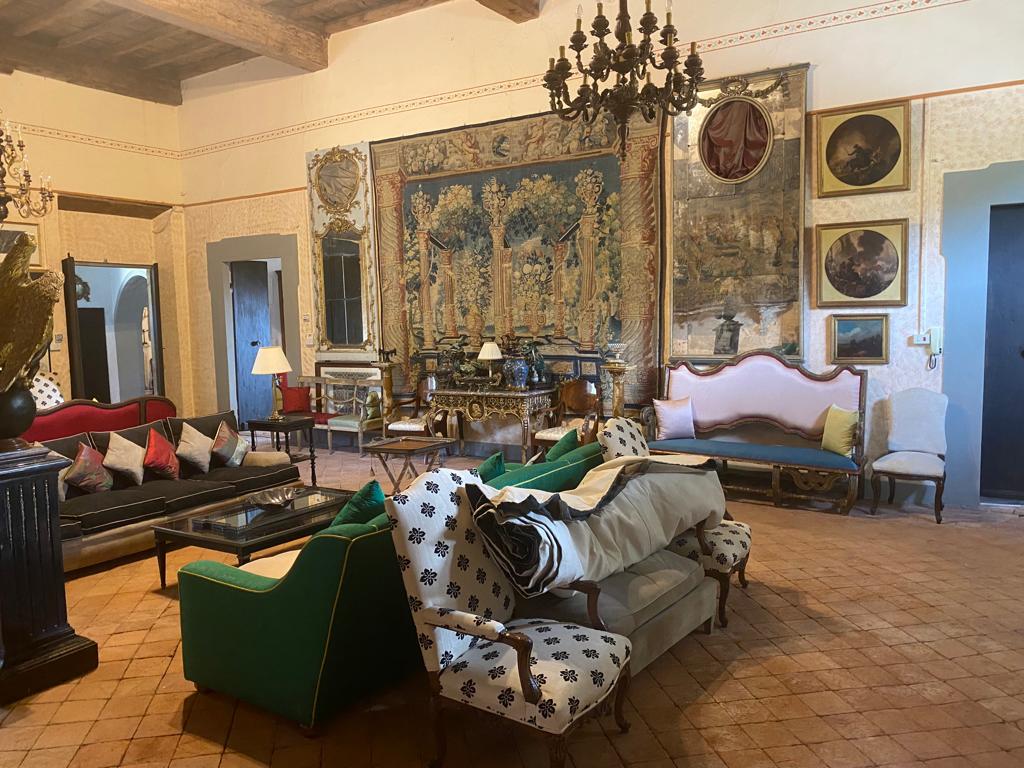
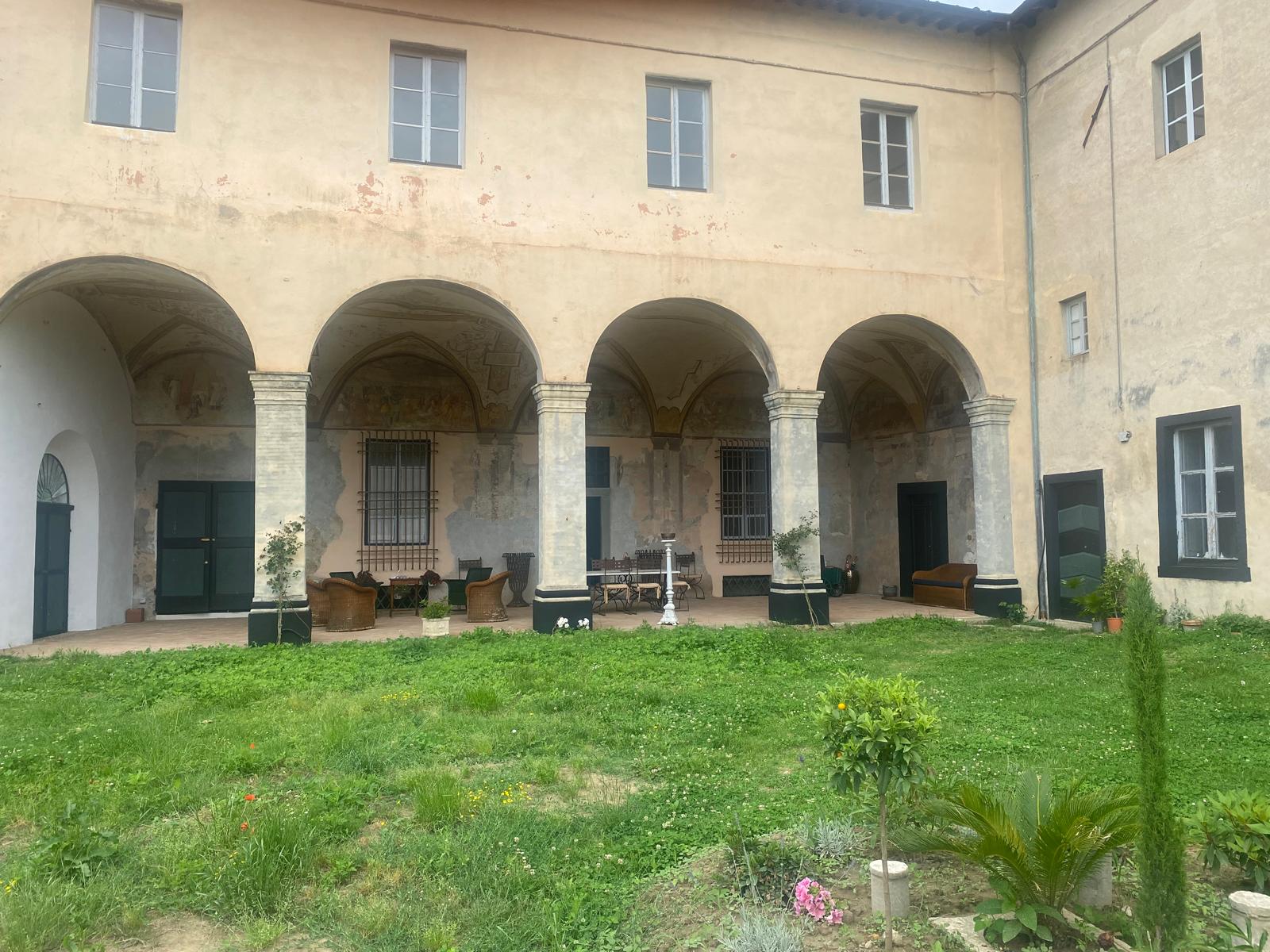
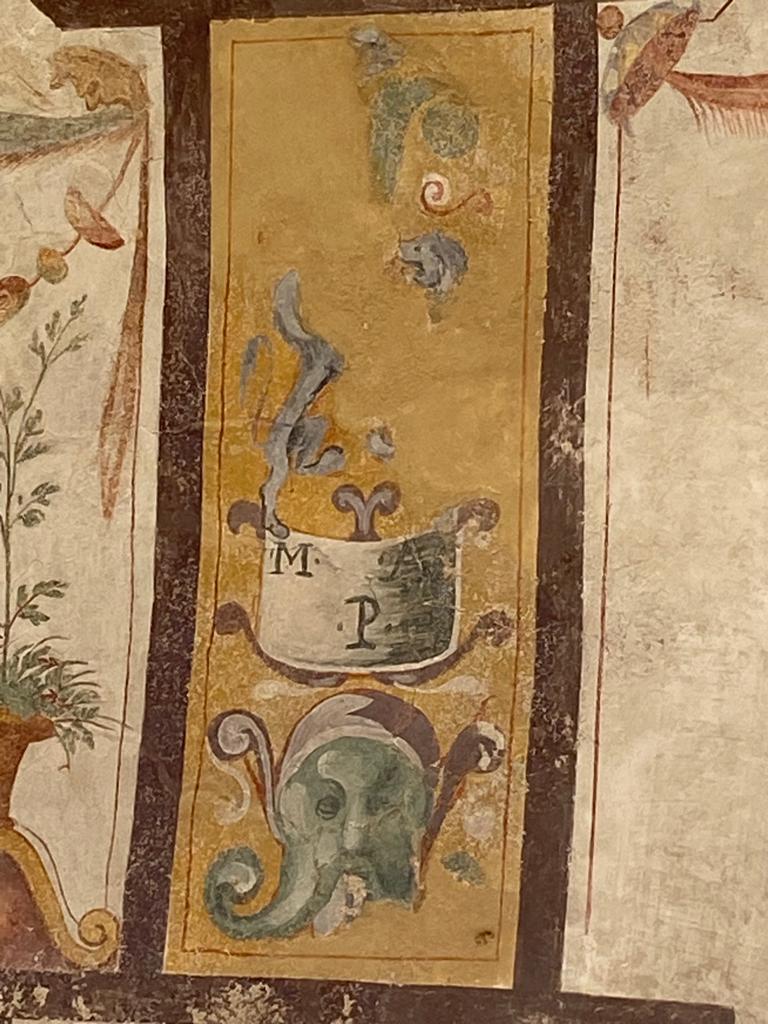
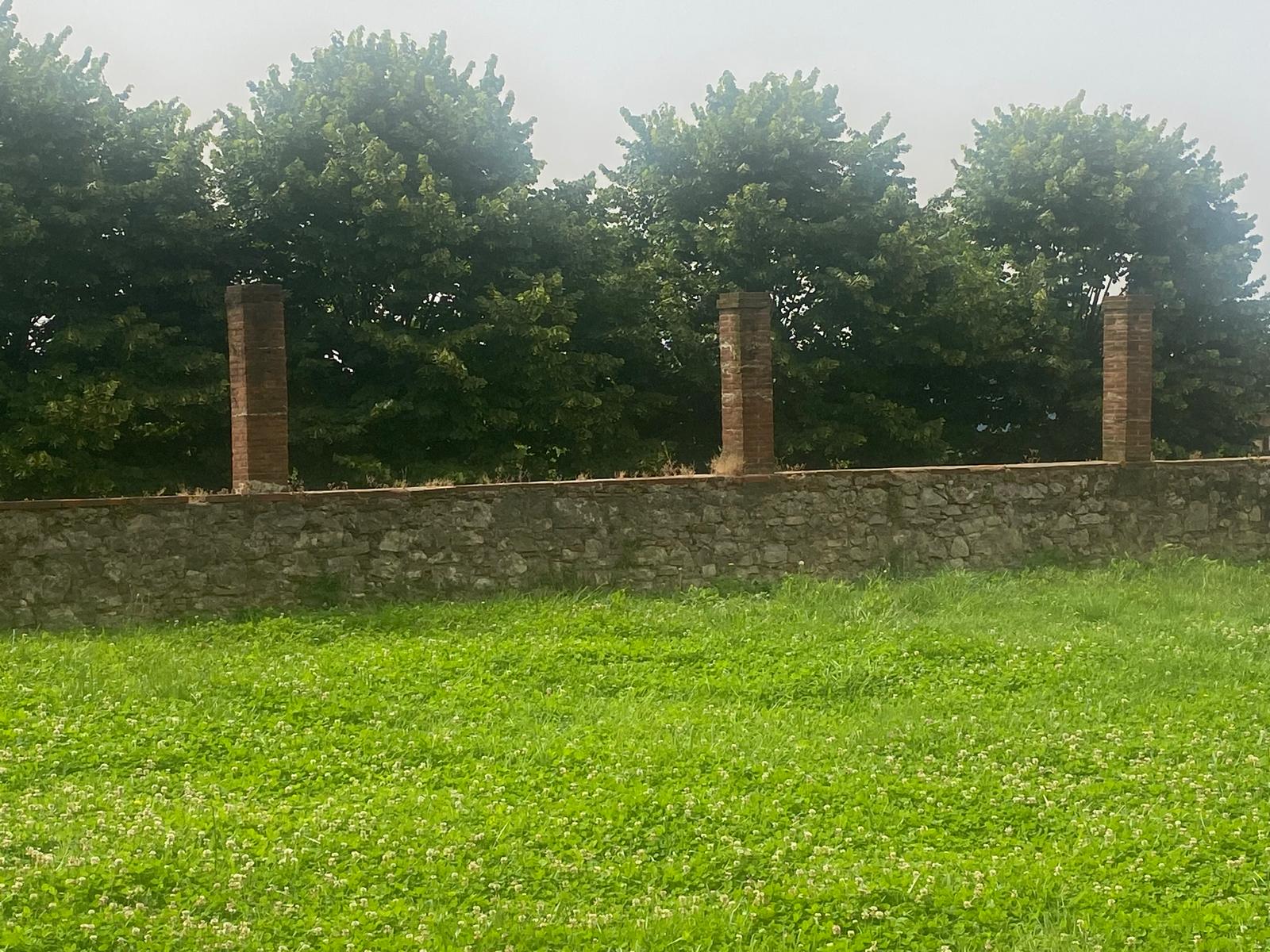
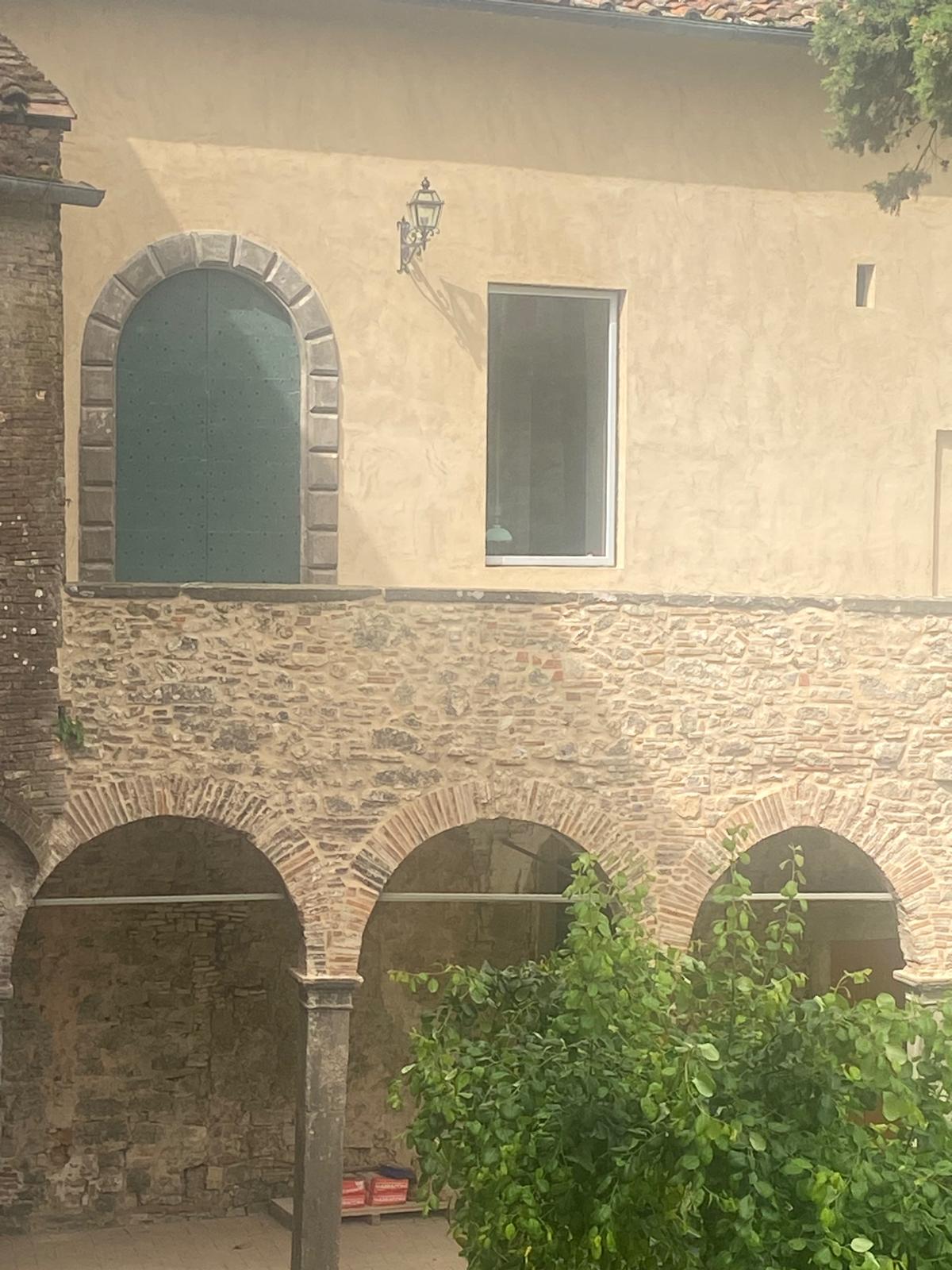
“The vision of the ancient Malpigli villa protected by JUNO VENUS ROMANA above the clouds in LOPPEGLIA, in the Apuan Alps. ‘Mercury, the Roman HERMES,’ always associated with Palazzo Malpigli in the 16th century (today Giustiniani) in Lucca, later the seat of the famous Platonic, diplomatic, and poetic academy known as the Accademia degli Oscuri (CORUSCANT ACCENS – ‘I take shelter by kindling the glowing embers’), and later, under Elisa Bonaparte, the Academy of Lucca. These symbols are still present in the CLERICI TRIKLINEA villa, including references to Elisa Bonaparte and to Bonaparte (1812). One can also observe the LUNAR SUN of Bernardino of Siena, now located in the portico with two ‘almost kneeling windows’ beneath the vaulted frescoes by a pupil of the Roman Platonic zodiacal grotesques of Martianus Capella, the ‘Marriage of Philology (Venus, Juno) and Mercury’ (see the reform of Nicholas V, pontifex and founder of the Vatican Palace Library in Rome), as well as allegories by Torquato Tasso on spiritual freedom, already foreshadowed by Ariosto in his Orlando Furioso at Castelnuovo d’Este (Apuan Alps).” Count Leonardo A.C. Clerici presents the Villa with its porticoes and 16th-century halls in the Apuan Alps region near Lucca. The proposed visit is structured along two axes: 1. A visit to the library of unique and rare editions of the great movement founded by F.T. Marinetti, Futurism, with editions and magazines of all the poetic and avant-garde movements of the last three centuries. In the foreground hall is the library of rare and unique 16th-century works, ranging from Petrarch to Ariosto and Tasso, to Roman Platonic and Stoic philology, to the corpus of Erasmus’s theology, and to the controversies surrounding Bayle’s great Dictionary (1697), which summarizes all the knowledge published in Italy and France before German scholastic systematic philosophy, an important collection of all the works of Islamic theology and philosophy from the great areas of the Iranian, Turkish, and Arab worlds of Africa, Asia, and the Mediterranean. In the large hall known as Etruria, you’ll find Clerici household furniture from China, 16th-century tapestries, furniture inspired by Piranesi, and the large polychrome marble cosmic table with the bronze symbol of fortune. In the same hall, you can admire the large clock, a gift to General Beauharnais from Emperor Napoleon Bonaparte on the occasion of the birth of the Kingdom of Italy. This monumental clock with centaurs and carillon is a work from the upper Ticino Valley in Lombardy and has been part of the Clerici household for over two centuries. Other symbolic objects, such as the golden imperial eagle of Roman Zeus, contemporary with the 1805 Bonapartist clock, testify to the Roman and Mediterranean dimension of the Clerici family, whose ancestors trace their lineage back to the Dukes of Visconti and Sforza. 2- Illustration of the frescoes by a pupil of Michelangelo Buonarroti, dated 1594, with scenes from Torquato Tasso’s Jerusalem and figures of Mercury and Juno with astral positions from the Roman-Italian Platonic tradition. Climbing the staircase of the adjoining apartments, you can access and visit the FTM Muse, a large hall dedicated to iconic objects, banners, and Islamic furniture from Alexandria, Egypt, a portrait by FTMarinetti, aeropainting, the mystical animal of the mirage from Medina to Jerusalem, Al Axa, and the Baga Serpent from Marinetti’s African novel. Wooden works on the courts of love in China and Japan, and paintings and graphics by Sironi, D’Annunzio united in celebrating the drum mule by sculptor Pietro Canonica celebrated by Marinetti in his works, the Quranic tablets for memorizing the divine word, the Russian icon with ocean pearls on silver metal, the Futurist manifesto, and the flags of Fiume and the 1942 Russian front at Kerbala… the tabuluth museum instrument built by Count Clerici in the spirit of gnosis and the grammar of essences in the Platonic and Stoic traditions, and in the demiurgic aerial painting of FTMarinetti. The Hall of the FTM Muse is frescoed with the coats of arms of the Este-Gonzaga family, created in 1594 by the nobleman Malpigli, creator of the Academy of the Dark Ones (Coruscant Accens, I darken by lighting the burning coals). The villa is surrounded by rustic, Arcadian gardens that reflect the Georgian simplicity of our Tuscan, Italian, Roman, and Arab poets. The tour will last two hours. Count Clerici will illustrate every object, room, and poetics of his home, remaining available for seminars or private meetings for in-depth study at the villa.
莱昂纳多·A.C. 克莱里奇伯爵呈现其别墅,内有文艺复兴时期的拱廊与十六世纪的大厅,坐落于卢卡附近的阿普安阿尔卑斯地区。此次参观安排分为两个主要部分: 1 — 图书馆参观 图书馆收藏了由F.T.马里内蒂创立的伟大艺术运动——未来主义——的珍稀与孤本版本,以及过去三个世纪所有诗歌与先锋运动的版本与期刊。 在相邻的大厅中,陈列着十六世纪珍贵而独一无二的古籍,从彼特拉克、阿里奥斯托、塔索,到罗马的柏拉图主义与斯多亚学派文献、伊拉斯谟的神学全集,以及围绕1697年拜勒《大词典》的争论。该词典被视为德国系统哲学兴起之前,意大利与法国已出版知识的总汇。 馆藏亦包括来自伊朗、土耳其与阿拉伯世界(非洲、亚洲及地中海地区)的大量伊斯兰神学与哲学经典著作。 在名为“伊特鲁里亚”的大礼厅内,陈设着克莱里奇家族自中国带来的家具、十六世纪挂毯、受皮拉内西启发的家具,以及镶嵌多彩大理石的宇宙大桌,其中央为象征幸运的青铜标志。 同厅中还陈列着拿破仑·波拿巴在意大利王国成立之际,由博阿尔内将军赠送的巨大座钟。该纪念性座钟以半人马与音乐钟饰,是伦巴第提契诺上谷的作品,已伴随克莱里奇家族逾两百年。 厅中亦有象征性物件,如与1805年拿破仑钟同年代的罗马宙斯金色帝鹰,彰显克莱里奇家族的罗马与地中海根源,其祖先可追溯至维斯孔蒂与斯福尔扎公爵家族。 2 — 参观1594年米开朗基罗弟子创作的壁画 壁画描绘了托尔夸托·塔索《被解放的耶路撒冷》中的场景,以及墨丘利与朱诺的形象,并配以源自罗马—意大利柏拉图传统的星象布局。 沿着通往连通房间的阶梯上行,便可进入 “FTM缪斯厅”——专门陈列标志性物品的大型大厅,包括: * 旗帜、徽章 * 来自埃及亚历山大的伊斯兰家具 * 马里内蒂的航空绘画肖像 * 从麦地那至耶路撒冷·阿克萨清真寺的神秘幻象之兽 * 马里内蒂非洲小说中的巴加之蛇 另陈列有关于中日“爱情法庭”的木雕、锡罗尼与丹南齐奥的绘画及图像,二者共同致敬雕塑家彼得罗·卡诺尼卡笔下被马里内蒂歌颂的炮驮骡。 还有: * 用于记忆神圣词句的古兰经木板 * 镶有海洋珍珠的俄罗斯银质圣像 * 未来主义宣言 * 斐乌梅与1942年俄罗斯—卡尔巴拉前线的旗帜 * 以及克莱里奇伯爵依据柏拉图、斯多亚传统与马里内蒂的造物航空画精神所制作的乐器——Tabluth。 “FTM缪斯厅”墙上绘有埃斯特—贡扎加家族的徽章,由贵族马尔皮利于1594年绘制,他亦是“晦暗者学院”的创立者(Coruscant Accens:“我在点燃炽热的炭火中闪耀”)。 别墅四周环绕着田园与阿卡迪亚式花园,呼应托斯卡纳、意大利、罗马与阿拉伯诗人所赞颂的乔治式朴素美学。 参观时长为两小时。 克莱里奇伯爵将亲自讲解各厅室、藏品及其家族美学传统,并可根据需要提供深入研究的研讨会或私人会面。
Le comte Leonardo A.C. Clerici présente la Villa, avec ses portiques et ses salons du XVIᵉ siècle, située dans la région des Alpes Apuanes près de Lucques. La visite proposée s’articule autour de deux axes : 1 — La visite de la bibliothèque, qui rassemble des éditions uniques et rares du grand mouvement fondé par F.T. Marinetti, le Futurisme, ainsi que des éditions et revues de tous les courants poétiques et d’avant-garde des trois derniers siècles. Dans le salon attenant se trouve la bibliothèque des éditions du XVIᵉ siècle, rares et uniques, allant de Pétrarque à L’Arioste et Le Tasse, jusqu’aux travaux de philologie platonicienne romaine et stoïcienne, aux corpus théologiques d’Érasme, et aux controverses relatives au grand Dictionnaire de Bayle (1697), qui synthétise tout le savoir publié en Italie et en France avant l’avènement de la philosophie scolastique systématique allemande. La collection comprend également un ensemble important d’œuvres de théologie et de philosophie islamiques provenant des grandes régions du monde iranien, turc et arabe, en Afrique, en Asie et autour de la Méditerranée. Dans le grand salon appelé Étrurie se trouvent les meubles de la famille Clerici provenant de Chine, les tapisseries du XVIᵉ siècle, le mobilier inspiré de Piranèse, ainsi que la grande table cosmique en marbre polychrome avec son symbole de la fortune en bronze. Dans ce même salon, on peut admirer la grande pendule offerte par le général Beauharnais au nom de l’empereur Napoléon Bonaparte, à l’occasion de la naissance du Royaume d’Italie. Cette pendule monumentale, ornée de centaures et dotée d’un carillon, est une œuvre de la haute vallée du Tessin, en Lombardie, et appartient à la maison Clerici depuis plus de deux siècles. D’autres objets symboliques y figurent, comme l’aigle impérial doré de Zeus romain, contemporain de la pendule bonapartiste de 1805, témoignant de la dimension romaine et méditerranéenne de la famille Clerici, dont les ancêtres remontent aux ducs Visconti et Sforza. 2 — L’illustration des fresques exécutées en 1594 par un élève de Michel-Ange Buonarroti, représentant des scènes de la Jérusalem délivrée du Tasse, ainsi que des figures de Mercure et de Junon, avec leurs positions astrales relevant de la tradition platonicienne romaine et italienne. En empruntant l’escalier menant aux appartements attenants, on accède à la Salle de la Muse FTM, vaste salon consacré aux objets iconiques : emblèmes, étendards, meubles islamiques d’Alexandrie d’Égypte, portrait de F.T. Marinetti en aéropittura, l’animal mystique du mirage reliant Médine à Jérusalem – Al-Aqsa –, le Serpent Baga issu du roman africain de Marinetti. Y sont exposées également des œuvres en bois relatives aux cours d’amour en Chine et au Japon, des peintures et graphiques de Sironi et de D’Annunzio, unis dans l’hommage à la mule d’artillerie du sculpteur Pietro Canonica, célébrée par Marinetti dans ses œuvres ; ainsi que des tablettes coraniques destinées à la mémorisation du verbe divin, une icône russe ornée de perles océaniques sur métal argenté, le manifeste du Futurisme, les drapeaux et étendards de Fiume et du front russe de Kerbala en 1942… Sans oublier l’instrument musical tabluth, construit par le comte Clerici dans l’esprit de la gnose et de la grammaire des essences, dans la tradition platonicienne, stoïcienne et dans l’aéropittura démiurgique de F.T. Marinetti. La Salle de la Muse FTM est décorée d’armoiries de la maison Este-Gonzaga, réalisées en 1594 par le noble Malpigli, créateur de l’Académie des Obscurs (Coruscant Accens : « je resplendis en attisant les braises ardentes »). La Villa est entourée de jardins rustiques et arcadiens, correspondant à la simplicité géorgique de nos poètes toscans, italiens, romains et arabes. La visite durera deux heures. Le comte Clerici présentera chaque objet, chaque salon, et la poétique de sa demeure, et restera disponible pour des séminaires ou des rencontres privées d’approfondissement et d’étude au sein de la Villa.
يقدّم الكونت ليوناردو أ. ت. كليريشي الفيلا بما تضمّه من أروقة وصالونات تعود إلى القرن السادس عشر، في منطقة الألب الأَبُوَانية قرب لوكّا. وتتوزّع الزيارة المقترحة على محورين رئيسيين: 1 ـ زيارة المكتبة التي تحتوي على طبعات نادرة وفريدة من نتاج الحركة الكبرى التي أسّسها ف. ت. مارينيتي، وهي حركة المستقبلية، إلى جانب طبعات ومجلات تخصّ مختلف التيارات الشعرية والطليعية خلال القرون الثلاثة الأخيرة. وفي الصالون المجاور تتجلّى مكتبة من طبعات القرن السادس عشر النادرة والفريدة، تمتدّ من بترارك وأريوستو وتاسو، إلى مؤلفات الفيلولوجيا الأفلاطونية الرومانية والرواقية، وإلى مجموعات اللاهوت عند إيرازمو، والجدالات المرتبطة بالمعجم الكبير لبايل (1697) الذي يلخّص مجموع المعرفة المنشورة في إيطاليا وفرنسا قبل ظهور الفلسفة المدرسية الألمانية المنهجية. كما تضمّ المكتبة مجموعة مهمّة من كتب اللاهوت والفلسفة الإسلامية الوافدة من المناطق الكبرى للعالم الإيراني والتركي والعربي في أفريقيا وآسيا والبحر المتوسّط. وفي الصالون الكبير المعروف باسم “إتروريا” نجد أثاث آل كليريشي القادم من الصين، واللوحات القماشية من القرن السادس عشر، والأثاث المستوحى من برينازي، والطاولة الكونية الضخمة المصنوعة من رخام متعدّد الألوان يتوسّطه رمز الحظ من البرونز. وفي الصالون نفسه تُعرض الساعة الضخمة التي أهداها الجنرال بوهارنيه باسم الإمبراطور نابوليون بونابرت بمناسبة قيام مملكة إيطاليا؛ وهذه الساعة التي تزيّنها القنطورات وآلة النغم، هي من أعمال وادي تيتشينو الأعلى في لومبارديا، وتشكّل جزءًا من منزل كليريشي منذ أكثر من قرنين. كما تبرز رموز أخرى مثل النسر الإمبراطوري الذهبي لزيوس الروماني، المعاصر للساعة النابليونية لعام 1805، لتشهد على الجذور الرومانية والمتوسّطية لعائلة كليريشي التي تمتدّ أنسابها إلى دوقات فيسكونتي وسفورتزا. 2 ـ شرح الجداريات التي رسمها أحد تلامذة ميكيلانجيلو بونارّوتي عام 1594، وفيها مشاهد من “القدس المحرَّرة” لتوركواتو تاسّو، وصور لعطارد ويونون، مع مواقع فلكية تستمدّ أصولها من التقليد الأفلاطوني الروماني الإيطالي. وعبر السلم المؤدّي إلى الشقق المتّصلة، يتمّ الدخول إلى “قاعة الموزة ف. ت. م.”، وهي صالون واسع يضمّ رموزًا أيقونية ورايات وأثاثًا إسلاميًا من الإسكندرية، وبورتريهًا لمارينيتي بأسلوب الطيران التشكيلي، وصورة الكائن الصوفي لسراب الرحلة من المدينة إلى القدس – الأقصى، وثعبان باغا من الرواية الإفريقية لمارينيتي. كما تُعرض أعمال خشبية عن محاكم العشق في الصين واليابان، ورسوم لسيرّوني ودانونتسيو في احتفاء مشترك ببغلة البطارية للنحّات بيترو كانونيتشا التي تغنّى بها مارينيتي في أعماله؛ إضافة إلى الألواح القرآنية الخاصة بحفظ الوحي، والأيقونة الروسية المزيّنة بؤلؤ المحيط على معدن من الفضة، وبيان المدرسة المستقبلية، ورايات فِيومي والجبهة الروسية في كربلاء لعام 1942… كما يُعرض آلة التبلوث الموسيقية التي صنعها الكونت كليريشي بروح الغنوص ونحو الجواهر، ضمن التقليد الأفلاطوني والرواقي وبصلته بالطيران التشكيلي الديميورجي عند مارينيتي. أمّا صالون “موزة ف. ت. م.” فهو مزيّن بشعارات أسرة إستي–غونزاغا التي أنجزها النبيل مالبيلّي عام 1594، مؤسّس أكاديمية “الغامضين” (Coruscant Accens: أتألّق بإشعال الجمر المتّقد). وتحيط بالفيلا حدائق ريفية وأركادية تعكس بساطة الشعر الجيورجي لدى شعرائنا التوسكانيين والإيطاليين والرومان والعرب. وتستغرق الزيارة ساعتين اثنتين، يقدّم خلالها الكونت كليريشي شرحًا لكلّ صالون وقطعة وتوجّه شعري في منزله، ويبقى متاحًا لعقد ندوات أو لقاءات خاصة للبحث والدراسة في الفيلا.
« vision de l’ancienne villa Malpigli, protégée par JUNON ET VÉNUS ROMAINE AU-DESSUS DES NUAGES, à LOPPEGLIA, dans les Apuanes ».
« Mercure, HERMÈS ROMAIN, toujours au palais Malpigli au XVI siècle (aujourd’hui Giustiniani) à Lucques, siège par la suite de la célèbre Académie platonicienne diplomatique et poétique dite Académie des Oscuri ( Coruscant accens, je m’assombris en attisant la braise ardente ), puis, avec Élisa Bonaparte,
Académie de Lucques.
Ces symboles sont encore présents aujourd’hui dans la villa CLERICI, y compris dans la TRICLINIA, comprenant la présence d’Élisa Bonaparte et de Bonaparte (1812).
On relève également le SOLEIL LUNAIRE DE BERNARDIN DE SIENNE, aujourd’hui présent dans le portique à deux « fenêtres presque agenouillées » sous les voûtes des fresques de l’élève des grotesques zodiacales romaines et platoniciennes de Martianus Capella : les « Noces de la Philologie » (Vénus, Junon) et Mercure (voir la réforme de Nicolas V, pontifex, fondateur de la Bibliothèque du Palais du Vatican à Rome), ainsi que les allégories de Torquato Tasso sur la liberté spirituelle, déjà annoncée
par l’Arioste dans son Furioso à Castelnuovo d’Este (Apuanes).
« 位于阿普阿内山脉洛佩利亚(Loppeglia)的马尔皮利古老别墅的景象,其上方云端由罗马的朱 诺与维纳斯守护。 »
« 墨丘利(罗马的赫尔墨斯)在 16 世纪始终与马尔皮利宫殿相连(今称朱斯蒂尼亚尼宫),位于卢 卡城,后来成为著名的柏拉图主义外交与诗歌学院——即**“奥斯库里学院”(Accademia degli Oscuri)的所在地(Coruscant accens:我在点燃炽热余烬时隐入幽暗),随后在埃莉萨·波拿 巴时期发展为卢卡学院**。
这些象征至今仍存在于克莱里奇别墅(Villa Clerici)之中,包括三宴厅(Triclinia,并 包含埃莉萨·波拿巴及波拿巴本人(1812 年)的象征性呈现。
此外,还可见锡耶纳的贝尔纳迪诺之“月太阳”象征,现位于一处设有“两扇几乎如跪姿般的窗户”的 柱廊内,位于拱顶壁画之下。这些壁画出自一位受马提亚努斯·卡佩拉影响的艺术家之手,融合了罗 马与柏拉图传统的黄道与怪诞装饰主题,其中包括《语文学的婚礼》(维纳斯、朱诺)与墨丘利(参见教宗尼各老五世的改革——其为罗马梵蒂冈宫殿图书馆的创建者,以及托尔夸托·塔索关于精神 自由的寓言,而这一理念早已由阿里奥斯托在其《疯狂的奥兰多》(Furioso)中,于埃斯特的卡 斯泰尔诺沃(阿普阿内山脉)加以预示。
رؤية الفيال القديمة لمالبيلي، المحمية من قبل جونو وفينوس الرومانية فوق » .«الغيوم، في لوّبيغليا ضمن جبال األلب األبوانية عطارد، هِرمِس الروماني، كان دائمًا في قصر مالبيلي في القرن السادس عشر »
)الذي ُيعرف اليوم بجيستينياني( في مدينة لوكّا، والذي أصبح الحقًا مقرّ األكاديمية األفالطونية الدبلوماسية والشعرية الشهيرة المعروفة باسم أكاديمية شعل الجمر المتوّهج :accens Coruscant (األوسكوري ، ثم تحوّلت في (أتعتم وأنا أُ
.عهد إليزا بونابرت إلى أكاديمية لوكّا وال تزال هذه الرموز حاضرة إلى اليوم في فيال كليريشي، بما في ذلك .(1812) التريكْلينيا، مع اإلشارة إلى حضور إليزا بونابرت وبونابرت نفسه كما ُيالحظ أيضًا الشمس القمرية لبرناردينو السينيزي، الموجودة حاليًا في الرواق ذي »النافذتين شبه الراكعتين« تحت أقواس الجداريات التي أنجزها تلميذ فنّ الزخارف الغروتسكية الزودياكية الرومانية واألفالطونية لمارْتيانوس كابيال، وال سيّما »زواج الفيلولوجيا« )فينوس، جونو( مع عطارد )انظر إصالحات نيقوال الخامس، الحبر األعظم، مؤسّس مكتبة قصر الفاتيكان في روما(، إضافة إلى االستعارات الرمزية لتوركواتو تاسّو حول الحرية الروحية، التي كان أريوستو قد بشّر بها في كاستلنووفو دي إِستِه )جبال األلب (Furioso (سابقًا في الجنون الهائج .األبوانية(
 Gardens
 Medium and long-term rentals
 Private events
 Residences
 Spirituality
 Visits