

CIN Code: IT037020A1YLF5EAEH
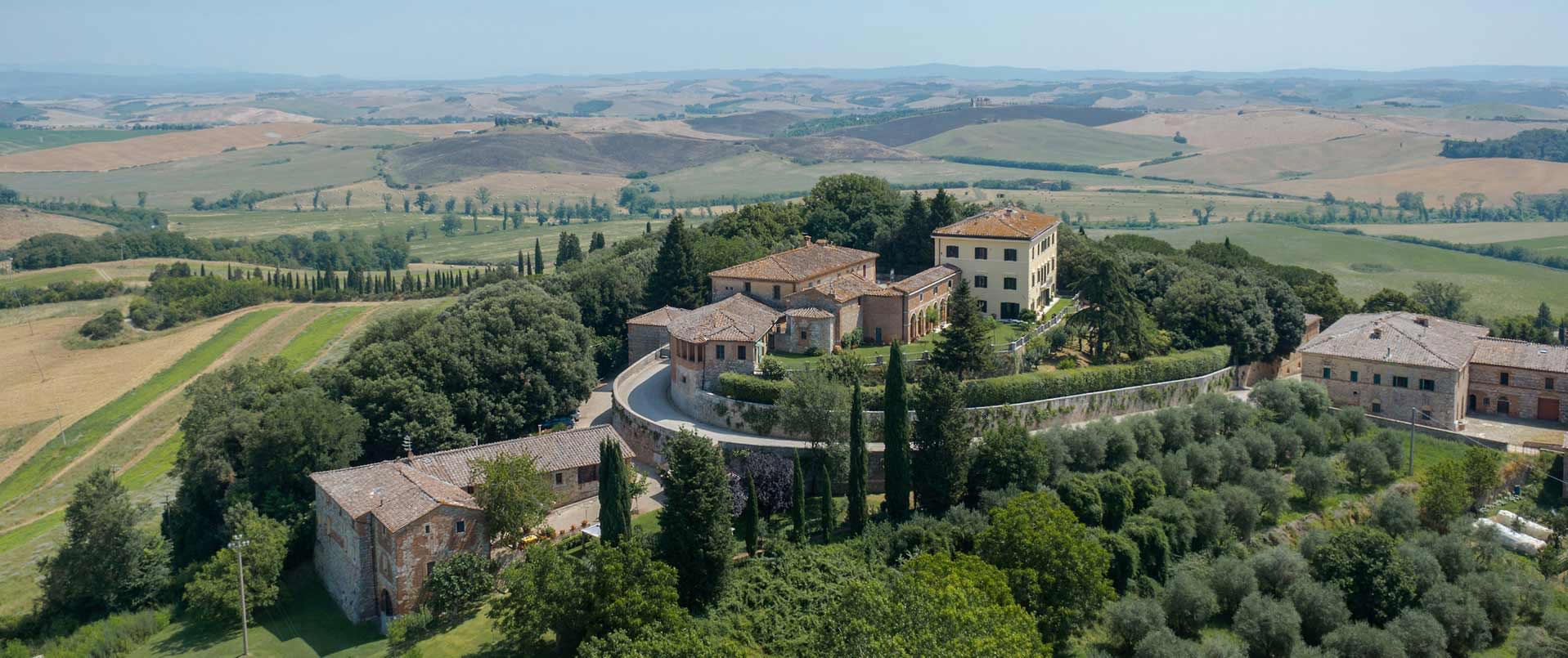
Palazzo di Varignana is set amid the elegant hills surrounding the village from which it takes its name, just a few kilometres from Bologna and Castel San Pietro Terme, fully immersed in a lush and captivating landscape.
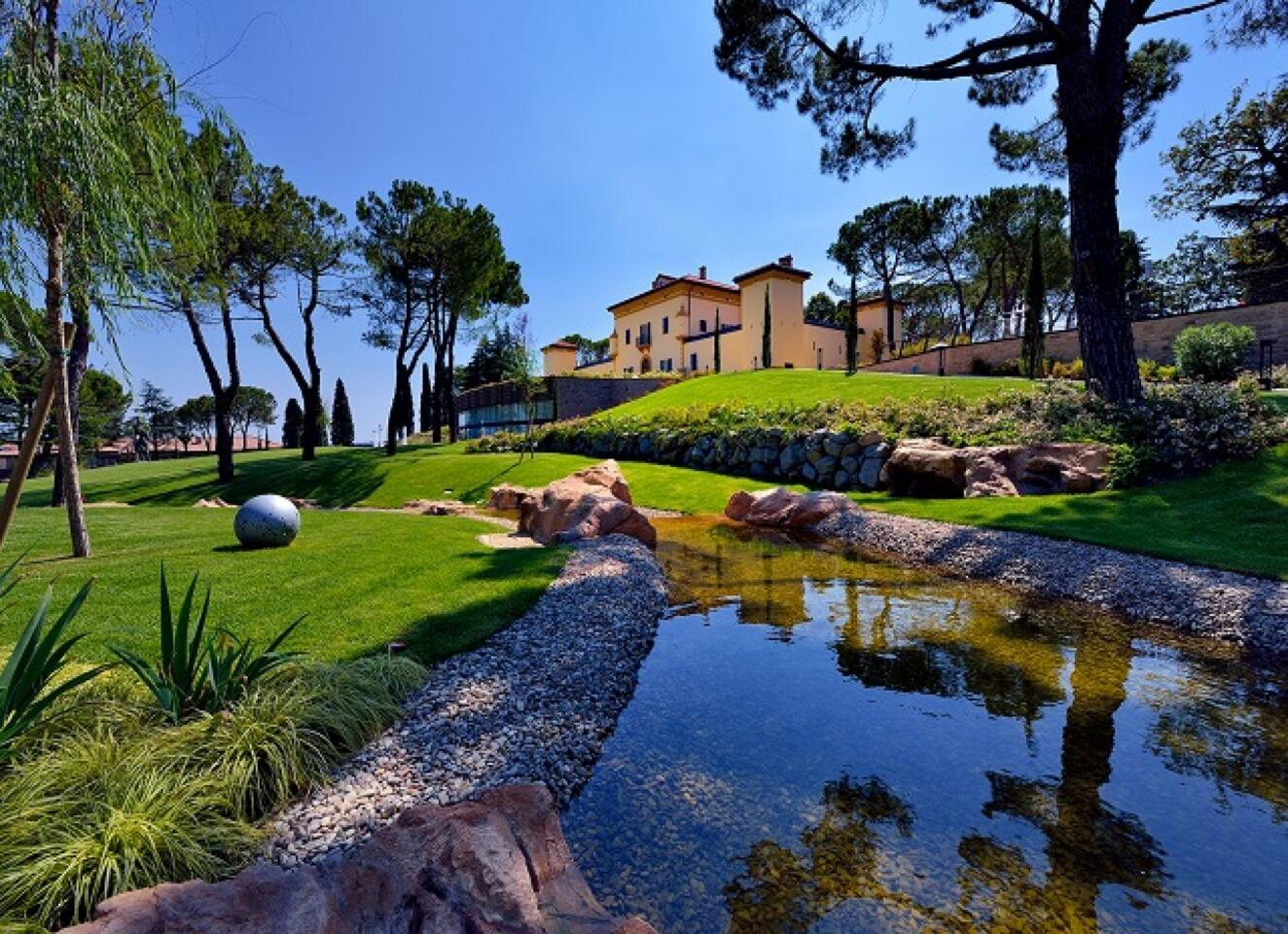
At the heart of the resort stands Palazzo Bentivoglio, a historic country residence dating back to 1705, carefully restored while preserving its original charm. Around it, the estate extends across 30 hectares of gardens, parks, water features and breathtaking views. Its various buildings are connected by underground passageways and elegant internal paths, forming a charming hamlet comprising five refined accommodation complexes and 150 rooms. Their clean, contemporary design features warm colours and materials that blend harmoniously with the surrounding hills.
The 150 spacious rooms at Palazzo di Varignana offer intimate, welcoming spaces enhanced by carefully selected furnishings and decorative details. Design and advanced technology come together in a succession of creative touches, always with comfort at the forefront. Ranging from 23 to 120 square metres, all rooms share one distinctive quality: an abundance of natural light. Combined with refined colours, materials and spectacular natural surroundings, this ensures the highest standards of comfort and hospitality.
The resort’s accommodation also includes six Villas, surrounded by the greenery and tranquillity of the Bolognese hills. These exclusive residences provide the ideal setting for holidays with family or friends, combining the privacy of a private property with the comfort and services of a high-end resort.
The History of Palazzo di Varignana
The history of Varignana began in the 2nd century BC, when the Romans founded the town of Claterna. During the Roman era, it flourished economically, particularly thanks to the consul Marcus Aemilius Lepidus, who in 189 BC established the famous road bearing his name: the Via Emilia.
Unlike many other towns founded during the Roman period, Claterna did not survive the collapse of the Western Roman Empire. With the arrival of the Middle Ages, defensive needs changed radically and the town was gradually abandoned. Its inhabitants moved to a settlement protected by hills and substantial walls, where, following a long period of transition, the Castle of Varignana was founded around the 10th century AD.
Throughout the Middle Ages, the village continued to expand and evolve, both architecturally—with the construction of the Church of San Lorenzo at its northern entrance—and politically, with Varignana becoming part of the municipality of Castel San Pietro.
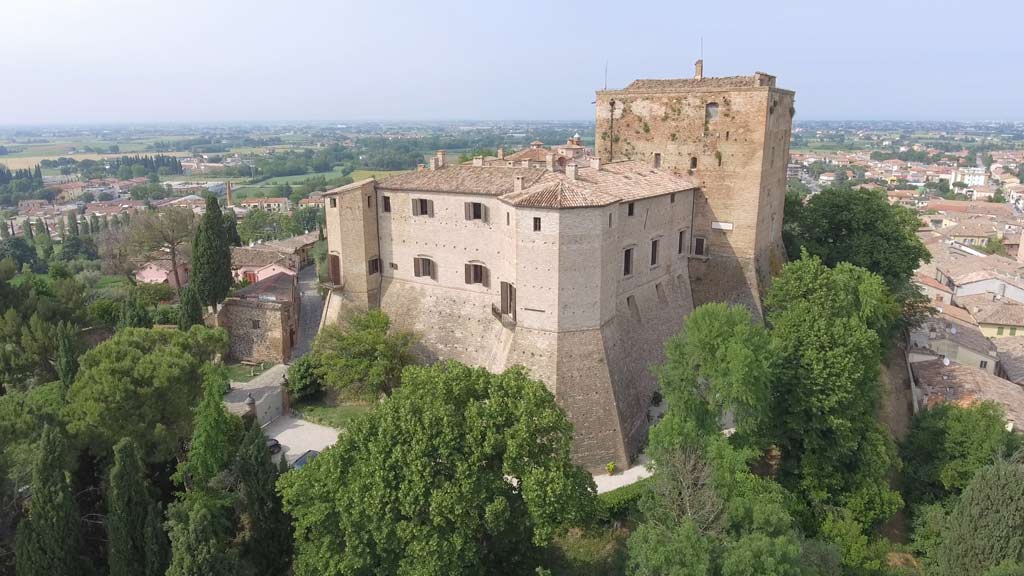
The castle always retained its identity as a fortified settlement, and its tower house, once the seat of the local administrative authority, still bears witness to its former splendour.
Varignana returned to the centre of political events during the French occupation, particularly in 1794, when Count Antonio Bentivoglio entered public service. He lived in the imposing Palazzo Bargellini-Bentivoglio, commissioned almost a century earlier, in 1705, by Count Orazio Bargellini and designed by Francesco Angiolini, perhaps the most celebrated architect of 18th-century Bologna.
Services
A resort nestled among the Bolognese hills, featuring Varsana SPA, swimming pools, restaurants, private villas, spaces for meetings, events and weddings, sports facilities and food and wine experiences connected with the local area.
Conference Centre
The historic cellars of Palazzo Bentivoglio lead into an elegant foyer providing access to the 300-square-metre Conference Centre. Filled with natural light and equipped with blackout windows, the venue offers the flexibility required for every type of event.
A gallery housing a valuable private collection of artworks and antiques connects the Conference Centre with Spazio Belvedere, a 770-square-metre multifunctional venue arranged over two floors. It is an ideal setting for banquets, fashion shows, musical events, receptions and presentations.
Aurevo Pool Restaurant
Surrounded by the greenery of Palazzo di Varignana’s park, with bright glass walls overlooking the swimming pool and the solarium’s water features, AUREVO Pool Restaurant is the ideal place to enjoy simple, light cuisine.
During the summer, its panoramic terrace makes lunch and dinner even more memorable, offering spectacular views over the surrounding hills.
Trattoria Le Marzoline
For those who appreciate the great culinary traditions of Emilia-Romagna, Palazzo di Varignana presents Le Marzoline, a tribute to the region’s traditional trattorias, surrounded by the greenery of the Varignana hills.
The restaurant occupies a fully restored two-storey country house, designed to accommodate up to 90 guests indoors and a further 100 guests in its charming outdoor dining area during the summer months.
Il Grifone – Fine-Dining Restaurant
In the resort’s historic 18th-century heart, Francesco Manograsso’s cuisine interprets the local area through three tasting journeys—Sea, Land and Garden—featuring ingredients from our own agricultural estate, fish from Italian waters and seasonal produce.
This innovative cuisine remains deeply rooted in the land and has been selected by the Michelin Guide for the second consecutive year.
Treno Reale – Railway Carriage Restaurant
The cuisine of times gone by, inspired by the culinary traditions of Emilia-Romagna.
A place of memories, filled with the flavours of history. These can be discovered in the fresh pasta rolled by hand every day, traditional family recipes, tortellini served in capon broth and tagliatelle with Bolognese ragù. Ingredients from our agricultural estate are brought together in an authentic and convivial atmosphere.
Ginkgo – Longevity Restaurant
Ginkgo is the result of the integration and synthesis of all the values underpinning the scientific approach of the Acquaviva Method.
At the heart of its philosophy are strategic combinations of nutraceutical ingredients, designed to influence longevity-related genes and enhance physical and mental performance. Sustainability, locally sourced produce and exceptional ingredients—including our award-winning extra virgin olive oil—guide every choice.
The menu is anti-inflammatory and low-FODMAP, as well as free from gluten, dairy products and refined carbohydrates. It is also suitable for low-carb, ketogenic and vegan diets and follows the principles of the MIND diet. Each dish is accompanied by an elixir designed to enhance its benefits.
Lounge Bar
Featuring beautiful outdoor terraces overlooking the resort’s evocative surroundings, the Lounge Bar combines design, style and creativity.
It is the perfect place to enjoy delicious aperitifs and drinks in complete relaxation, choosing from a wide variety of cocktails. It provides an inviting setting in which to spend time with friends after work, after dinner or during the weekend.
Intimate and welcoming, the Lounge Bar can also be transformed into a venue for events and business meetings.
Varsana SPA
With more than 4,000 square metres dedicated to wellbeing, Varsana SPA offers an immersive experience inspired by the natural landscape of the Bolognese hills.
Its wellness circuit includes the atmospheric Grotta dei Calanchi, the Cava d’Oro Bianco, hydromassage pools, saunas, a Turkish bath, sensory showers, a sound pool and relaxation areas.
Outside, 2,500 square metres accommodate seven panoramic swimming pools, while the private Ars Vivendi SPA offers rituals inspired by the Arabian hammam and the Japanese Ofuro tradition.
Personalised massages and treatments also feature ingredients produced on the Palazzo di Varignana agricultural estate, including extra virgin olive oil, wine, saffron and pomegranate.
The Acquaviva Method
Created by Dr Annamaria Acquaviva, Scientific Director of Palazzo di Varignana, the Acquaviva Method combines Western science with Eastern practices to promote wellbeing, energy and longevity.
The method is founded on five pillars: functional nutrition, inner harmony, physical activity, sleep and rest, and targeted nutritional and cosmetic supplementation. These principles form the basis of personalised retreats dedicated to detoxification, weight loss, stress management, sleep quality, healthy ageing and restoring physical wellbeing.
Led by a multidisciplinary team, the programmes combine functional nutrition at Ginkgo Longevity Restaurant with physical activity, mindfulness, Nature Therapy, coaching and treatments at Varsana SPA. Guests receive practical tools to help them maintain a healthier and more mindful lifestyle over time.
Leisure and Sports Activities
Palazzo di Varignana is the ideal place to regain your best physical condition through sport or simply enjoy a stay in the open air.
Fitness centre open 24 hours a day, seven days a week.
Tennis court, basketball half-court, padel courts and squash court.
Golf facilities including a putting green, chipping green and driving range with 11 practice bays.
Outdoor swimming pools open from May to September.
Outdoor wellness area with a fitness trail.
Outdoor children’s play area.
Weddings
Palazzo di Varignana is a place where beauty has always been combined with meticulous attention to detail, making it the perfect setting for couples who wish to celebrate their dream wedding with the support of an outstanding team.
Our professionals work together to create more than simply an event: they bring genuine works of art to life, allowing each couple to experience a dream come true on one of the most important days of their lives.
The Ornamental Garden
Part of the prestigious Grandi Giardini Italiani network, the Ornamental Garden extends across three hectares, featuring terraces, fountains, a spectacular swimming pool and the Carlico Labyrinth.
Designed by Antonio Perazzi, it is home to one of Italy’s most important oak collections, as well as majestic centuries-old olive trees.
The Range of Agricultural Products
Today, Palazzo di Varignana extends across more than 900 hectares of farmland, covering a large area of the hills south of the Via Emilia, near the village of Varignana in Castel San Pietro Terme.
Of these, 450 hectares are devoted to olive groves, producing an exceptional extra virgin olive oil recognised as one of the finest expressions of Italian excellence.
The estate also includes 57 hectares of vineyards, mainly planted with native grape varieties, 3,000 square metres of vegetable gardens and 900 square metres dedicated to aromatic herbs.
Specialised orchards cover a total of 3.58 hectares, carefully divided between 1.47 hectares of pomegranate trees, 1.46 hectares of apricot trees and smaller plots devoted to figs and other fruit varieties.
A further two hectares are dedicated to nut trees, comprising 1.6 hectares of almond trees and 0.4 hectares of hazelnut trees. Together, they enhance both the agricultural diversity of the estate and the resort’s culinary offering.
Places of Interest Nearby
EVER Destination Concierge
EVER creates tailor-made experiences through which guests can discover the most authentic side of Emilia-Romagna, encompassing culture, nature, gastronomy and craftsmanship.
A dedicated travel designer listens to each guest’s wishes, creates personalised itineraries and takes care of every detail, selecting places and experiences away from the most familiar tourist routes.
Thanks to its deep knowledge of the region and network of local relationships, EVER opens the doors to historic workshops, producers, private residences, villages and traditions, transforming every stay into a personal and memorable journey.
Dozza
Dozza is a fascinating medieval village where art plays a central role in local cultural life. It hosts the Biennale del Muro Dipinto, an event that brings together artists from different places to paint the walls of its buildings, transforming the streets into a remarkable open-air art gallery.
Another essential attraction is the imposing Rocca Sforzesca, home to an art gallery and the Emilia-Romagna Regional Wine Centre, where visitors can taste and purchase some of the region’s most renowned wines.
The Ferruccio Lamborghini Museum
Lamborghini’s greatest creations, hundreds of historic photographs and detailed displays guide visitors through the ambitious dreams of Ferruccio Lamborghini, while an evocative atmosphere brings the exciting and courageous post-war years back to life.
The museum is housed within the impressive Ferruccio Lamborghini Multifunctional Centre, where even the smallest architectural details are inspired by the distinctive style of the celebrated Italian automotive brand.
Bologna
Every corner of this great city tells a chapter of Italian history. Its medieval historic centre, one of the best preserved in Europe, is characterised by around 40 kilometres of porticoes and the red-brick buildings that give Bologna its warm and unmistakable atmosphere.
The Two Towers, the city’s most recognisable symbol, are the last major witnesses to the almost 200 tower houses that dominated its medieval skyline.
Alongside the history preserved in its palaces, squares, prestigious museums, churches and beautiful gardens, Bologna is alive day and night. Its many traditional osterias, theatres, open-air markets and artisan food shops continue a culinary tradition that has made the city famous around the world.
Ferrara
Ferrara is a small city recognised as a UNESCO World Heritage Site. It was the capital of the Duchy of Este until 1598, when it was transferred to the Papal States.
Today, it retains the tranquillity of an Italian provincial city while preserving evidence of its former splendour. The imposing Estense Castle dominates the cityscape, while the streets surrounding the magnificent cathedral still reveal the medieval heart of Ferrara, with narrow lanes, small Gothic churches, the historic Jewish Ghetto and its synagogues.
Ravenna
Ravenna brings together many layers of history, from the age of Roman emperors to the rule of the popes. Awarded the Gold Medal of Military Valour, the city is rich in monuments and churches and provided both refuge and a final resting place for Dante Alighieri.
From the Basilica of San Francesco and the Mausoleum of Theodoric to Dante’s Tomb, every corner of Ravenna offers the opportunity to rediscover an important period in Italian history.
Rimini
Rimini is not only a celebrated seaside destination on the Romagna Riviera but also a city with a significant historical and cultural heritage.
Founded by the Romans in 268 BC, it is home to several important Roman monuments, including the Arch of Augustus, Tiberius Bridge and the Roman Amphitheatre.
During the early Renaissance, under the rule of the Malatesta family, its court became one of the most vibrant of its time. It welcomed artists and intellectuals such as Leon Battista Alberti, Piero della Francesca, Roberto Valturio and Matteo de’ Pasti, who contributed to masterpieces including the Tempio Malatestiano, which can still be admired in the historic centre today.
San Marino
The oldest republic in Europe offers much more than history. Events, festivals, races, sporting competitions, music and theatre provide visitors with new experiences in one of the world’s most evocative destinations.
From shopping and cultural events to re-enactments of important historical moments, there are always countless reasons to visit San Marino.
At the foot of Mount Titano are the Maranello Rosso museums, entirely dedicated to the history, lives and vehicles of Enzo Ferrari and Carlo Abarth. Here, visitors can immerse themselves in the unique atmosphere of these legendary brands and become part of an exciting journey through the history of some of the world’s most famous cars.
Florence
Founded by the Romans in the 1st century BC, Florence is an important centre of industry, craftsmanship, commerce, culture, art and science.
The foremost city of Italian art and the greatest expression of the Renaissance, it is also regarded as the birthplace of the Italian language and home to some of the country’s greatest creative minds.
Set in a basin surrounded by hills and stretching along the banks of the River Arno, Florence possesses an extraordinary artistic heritage. Its legacy encompasses works by Cimabue and Giotto, considered the fathers of Italian painting, as well as the genius of Leonardo da Vinci, Michelangelo, Boccaccio and Dante.
With landmarks including the Cathedral of Santa Maria del Fiore, the Baptistery, the Uffizi Gallery, the Bargello Museum, the Accademia Gallery, the churches of Santa Maria Novella and Santa Croce, Palazzo Pitti and Ponte Vecchio, it is impossible not to consider Florence one of the most beautiful cities in the world.
Visit to a Traditional Balsamic Vinegar Producer in Modena
Discover the authentic pleasure of traditional balsamic vinegar with a visit to a local acetaia and a restaurant showcasing the surprising culinary uses of this remarkable product.
The tools and techniques used in its production were traditionally passed down from generation to generation and were once included in a young woman’s dowry.
Only after a suitable ageing period does the vinegar achieve the remarkable balance of aromas and flavours required to obtain Protected Designation of Origin status.
The ageing process takes place in a sequence of small barrels, known as a batteria, made from different types of wood and arranged in decreasing sizes. This process gives the vinegar its unique texture and aroma.
During the visit, guests will learn about the essential rules and methods followed to produce the finest Traditional Balsamic Vinegar of Modena, followed by a tasting of the products presented.
The Ferrari Museum
The official exhibition of the Prancing Horse marque is located just a short distance from one of the world’s most famous car factories.
A true guardian of the Ferrari legend, the museum opened in Maranello in 1990 under the name Galleria Ferrari. Ever since, it has displayed the cars, images and trophies that have shaped the history of this celebrated brand.
The museum is divided into two large exhibition halls displaying some of the most significant historic and contemporary vehicles, together with archive photographs and films, memorabilia, trophies and sophisticated mechanical and electronic components.
 Accommodation
 Co-Working
 Film sets
 Gardens
 Parks
Parks Pet Friendly
 Photo shoots
 Private events
 Residences
 Set Commercials and Videoclips
 Visits
 Weddings
 Cultural tourism
 Cyclotourism
 Excursions
 Gastronomy
 Hiking
 Nature
 Pool
Pool Products
 Relaxation and Wellness
 Restaurants
 Sports
 Tasting
 Walking itineraries
 Wine tourism